How to Repair a Glass Door in 2026?

In 2026, repairing a glass door still begins with identifying the real problem. Scratches, loose hinges, worn rollers, and failed seals can look similar at first. Yet a door that drags across the floor may need hardware adjustment, not new glass. Before choosing a repair, note when the trouble started and whether the door moves, locks, and seals properly. Look for chipped edges, spreading cracks, gaps around the frame, or moisture between insulated panes. Small signs matter. Use the door gently while you assess it. If the glass is cracked, unstable, or making unusual sounds, stop using it and keep people clear.

Reliable Glass Door Repair depends on the door type, the damage, and the condition of its frame and hardware. Some problems, such as a loose handle or dirty track, may be simple to address. Others require trained help, especially when a heavy panel must be removed or damaged safety glass replaced. An experienced technician should explain the likely cause, describe suitable options, and provide a clear estimate. Ask how the replacement glass will match the existing panel and whether the hinges, rollers, and seals will also be checked. Photos can help document the damage, but they cannot confirm every hidden issue. Costs vary by design and parts availability. That can be frustrating. Not every quick adjustment lasts, and a repair may reveal a second problem. Careful assessment is worth the extra time.
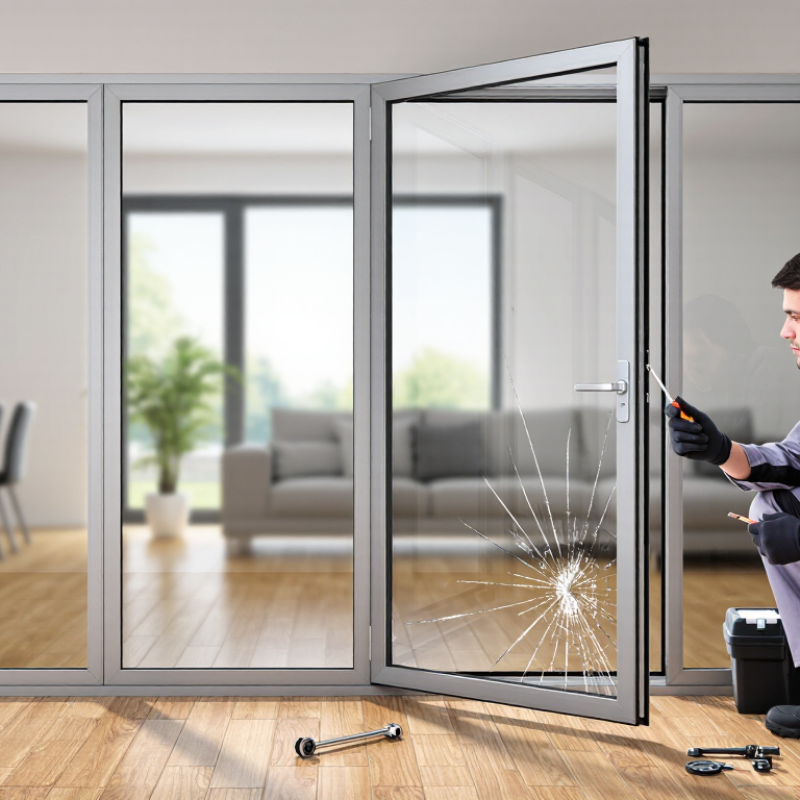
How to Repair a Glass Door in 2026?

Assess the Glass Door Damage and Identify Its Type

Before choosing a repair, inspect the door in bright daylight and keep children and pets away. Wear sturdy shoes, and do not press on cracked or loose glass. Take your time. Look for the crack’s length, direction, and location, then check whether pieces are missing or the pane is shifting in its frame. A common assessment mistake is focusing only on the visible crack; a loose frame or damaged track can also make the door unsafe.

Identify the glass type if possible. Tempered glass often breaks into many small pieces, while laminated glass may remain attached to an inner layer after cracking. A cloudy band or moisture between panes usually points to a failed insulated-glass seal, not surface dirt. If you cannot identify the pane, check any etched marking in a corner or ask a glass professional. Visual clues help, but they are not always definitive.

Next, examine the frame, hinges, rollers, and handle. A door that sticks, scrapes the sill, or rattles may have alignment or hardware damage alongside the glass problem. Note these symptoms before requesting an assessment. If the pane is shattered, unstable, or spreading with small cracks, avoid operating the door and arrange prompt professional inspection. A photo from a safe distance can help document the damage, though it cannot confirm the glass type on its own.

Prepare Safety Gear, Tools, and Replacement Materials

How to Repair a Glass Door in 2026?

Before starting, clear the area and keep children and pets away. Wear safety goggles, cut-resistant gloves, long sleeves, and sturdy shoes. OSHA’s eye-and-face-protection guidance cites an estimate of about 2,000 work-related eye injuries per day in the United States. That figure covers many jobs, not home repairs, but it shows why eye protection matters. Secure the door so it cannot swing. If the glass is large, overhead, or badly cracked, stop and call a qualified glazier.

Gather a tape measure, level, suitable glazing tools, and a compatible sealant. For replacement glass, confirm the panel’s dimensions, thickness, and type; tempered and laminated glass are not interchangeable in every application. A glazier can verify the specification and assess a damaged frame. Keep setting blocks and clean cloths ready, too. One easy-to-miss detail is the frame: even correctly sized glass may not seat safely if it is bent or loose.

Tips: Photograph the frame and note any markings before ordering materials. Move slowly; small shards can hide near the threshold. If the panel shifts, the frame flexes, or you are unsure of the glass type, pause rather than improvising. That extra check can prevent a poor fit.

How to Repair a Glass Door in 2026? — Prepare Safety Gear, Tools, and Replacement Materials
Preparation Category Item Purpose and Selection Notes Safety or Compatibility Check
Safety gear Impact-rated safety glasses Protect eyes from glass chips, dust, and debris during inspection or hardware work. Wear throughout the task; ordinary prescription glasses are not a substitute for protective eyewear.
Safety gear Cut-resistant gloves and sturdy, closed-toe footwear Reduce the risk of cuts from sharp edges and fragments. Gloves do not make broken glass safe to handle. Do not pick up large or unstable shards by hand.
Safety gear Work-zone barriers and a debris container Keep people and pets away; collect small fragments in a rigid, puncture-resistant container. Do not use a thin plastic bag for sharp glass. Secure or restrict access to a damaged door.
Inspection Tape measure and flashlight Record the door opening, panel dimensions, visible hardware, and the location of damage. Measure the frame and existing panel carefully; glass thickness and edge details may not be easy to determine in place.
Tools Screwdrivers, hex keys, and a suitable wrench Remove or adjust compatible handles, locks, rollers, and other door hardware. Use the correct size to avoid damaging fasteners. Support a door panel before loosening components that hold it in place.
Tools Glass-handling suction cups Help trained handlers control a sound, appropriately sized glass panel during removal or installation. Suction cups are not a guarantee against a fall. Large, heavy, cracked, or overhead panels require qualified handling.
Tools Soft brush, dustpan, and HEPA-filter vacuum Collect small glass fragments from accessible surfaces after the area has been made safe. Do not vacuum large shards or use a household vacuum that is not suitable for fine debris. Follow the vacuum manufacturer’s instructions.
Replacement materials Correctly specified safety-glass panel For a broken panel, obtain glass matched to the door’s required type, thickness, dimensions, and installation system. Tempered or laminated safety glass may be required by location and building rules. Never substitute ordinary annealed glass without confirming suitability.
Replacement materials Compatible glazing gasket, setting blocks, or glazing sealant Use the components specified for the door frame and replacement panel to support and seal the glass. Compatibility depends on the frame, glass, and original glazing method. Do not improvise with household adhesive.
Replacement materials Door-specific rollers, track parts, hinges, or weatherstripping For a sticking or drafty door, replace worn parts with components matching the door’s design and measurements. Identify the door type and part dimensions before purchase; avoid forcing a misaligned panel or track.
Before starting Door and damage assessment Determine whether the issue is a loose handle, worn roller, damaged seal, frame problem, or broken glass. Stop work and contact a qualified glass professional if a panel is cracked, shattered, unstable, unusually large, or difficult to access.
Before starting Local requirements and installation instructions Check applicable building rules and the door or glazing system’s instructions before selecting replacement materials. Requirements vary by location and door placement. Use a qualified installer when safety-glazing or structural requirements are uncertain.

Repair Minor Scratches, Chips, or Loose Door Components

Small scratches on a glass door often look worse in afternoon light. Clean the pane with mild soap, then inspect it from both sides. A glass-safe polishing compound may reduce a superficial mark, but stop if the scratch catches a fingernail. Deep scratches weaken the pane and need professional assessment, not aggressive sanding.

The U.S. Department of Energy’s Energy Saver guidance estimates that windows account for 25–30% of residential heating and cooling energy use. That figure is not specific to doors, but it shows why damaged seals and poor closure deserve attention.

Tiny chips need more caution. Keep the door closed, avoid pressing on the damaged spot, and arrange an assessment—especially if the chip touches an edge or the glass is cracked. Tempered glass can fail suddenly after edge damage. Loose handles, hinges, or rollers are often simpler: support the door, tighten accessible fasteners, and check whether it moves evenly without scraping. Don’t force a stuck panel. A little wobble can hide a worn part; I’ve seen people tighten one screw and miss the actual cause. If the glass shifts in its frame, or the door is heavy, leave removal and adjustment to a qualified glass technician.

Replace Cracked Glass and Damaged Seals Safely

How to Repair a Glass Door in 2026?
Replace Cracked Glass and Damaged Seals Safely

A cracked door pane can shift without warning. Stop using the door, keep children and pets away, and avoid pressing tape against loose shards. Safety first. A qualified glazier can identify whether the panel is tempered or laminated and match its thickness and safety specification. Don’t remove a large pane yourself; glass edges can be sharp, and the panel may be heavier than it looks.

Seal problems need a careful diagnosis. Fog or droplets trapped between panes often indicate a failed insulated-glass unit seal; a draft around the frame may instead mean worn weatherstripping. The U.S. Department of Energy’s Energy Saver guidance estimates that windows account for 25–30% of home heating and cooling energy use. That figure is for windows, not every glass door, but it underscores why air leakage matters. Ask the repair professional to inspect the frame, measure the replacement unit, and check that drainage openings remain clear.

A quick bead of silicone may look tidy, but it won’t restore a failed factory seal between panes. Replace the damaged glass unit or weatherstrip with parts suited to the door system, then check that the door closes evenly without rubbing. Small alignment problems can return. I’d still ask for the cause, not just the replacement.

Test Door Alignment, Movement, and Weather Sealing

Check the glass door before replacing parts. Close it slowly and watch the gap between the panel and frame. It should remain even from top to bottom. A tapered gap can point to loose rollers, a sagging panel, or a frame that has shifted. Small clues matter. Look for cracked glass, loose handles, and track debris before adjusting anything.

Slide the door along its full travel. It should move without scraping, jumping, or needing a hard pull. Clean the track and check whether the rollers sit evenly; avoid forcing a stiff panel. Then inspect the weather seals with the door closed. Look for flattened, torn, or detached strips, and check for daylight around the edges. A simple paper test can help: close the door on a sheet and see whether it pulls free easily. It is easy to blame the seal too soon; alignment may be the real cause. The U.S. Department of Energy’s Energy Saver guidance estimates that air leaks can account for 25% to 40% of heating and cooling energy use in a typical home, though that figure is not specific to doors. For professional verification, ASTM E783 covers field air-leakage testing, while ASTM E1105 covers field water-penetration testing. Don’t force it. If the glass is cracked or the frame is distorted, stop and seek qualified repair help.