
How to Choose Commercial Window Replacement Services
Choosing commercial window replacement services requires more than comparing prices. It demands practical judgment, verified expertise, and careful attention to building conditions. Commercial Window Replacement can improve daylight, comfort, security, and energy performance. However, poor planning may create drafts, water leaks, or unexpected delays.
Begin by reviewing the contractor’s experience with similar properties. An office tower, retail unit, and warehouse need different glass, frames, and installation methods. Ask for recent project examples, professional credentials, insurance details, and clear warranty terms. Speak with previous clients when possible. Their comments may reveal punctuality, communication quality, and how problems were handled. Strong providers explain technical choices in plain language. They should discuss glazing ratings, frame materials, ventilation, access equipment, and local building requirements.
Request a detailed site assessment before accepting a proposal. Inspectors should check opening measurements, surrounding masonry, interior finishes, and potential water damage. A reliable quote separates materials, labor, disposal, permits, and possible repairs. It should also explain the work schedule and protection for employees, customers, and furnishings.
The lowest bid is not always the most economical choice. Cheap components may increase heating costs or require earlier repairs. Yet, an expensive proposal is not automatically better. No checklist is flawless. Hidden conditions can change the project. A trustworthy contractor acknowledges uncertainty and documents assumptions clearly. This approach supports informed decisions and reduces avoidable surprises. With careful research, commercial owners can select a window replacement partner that combines proven workmanship, honest communication, and dependable long-term service.
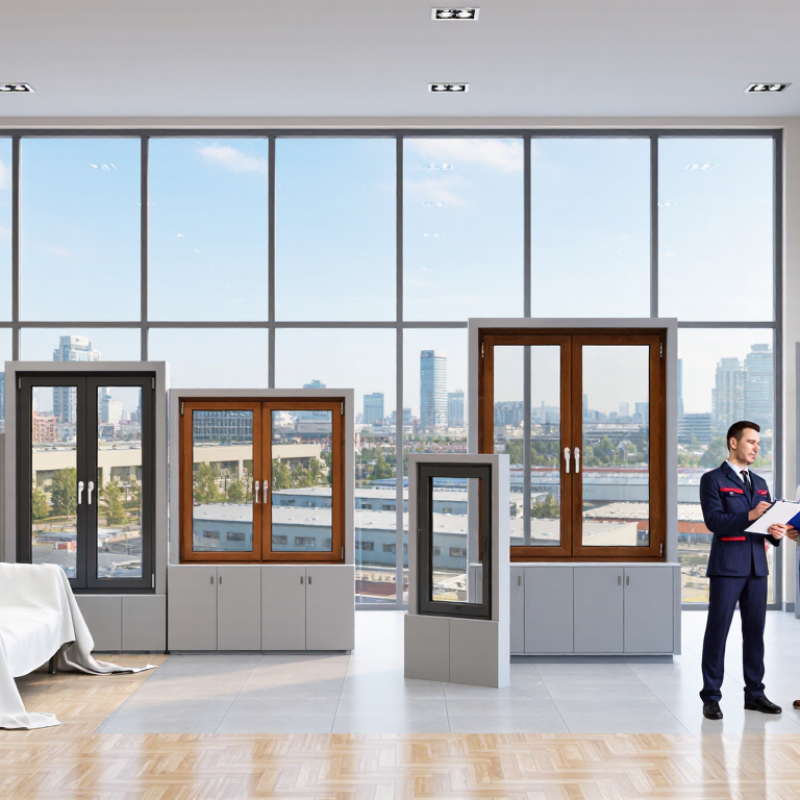
Define Your Commercial Window Replacement Requirements
How to Choose Commercial Window Replacement Services
Defining your commercial window replacement requirements should begin with the building’s daily reality. Walk through each area at different times. Note drafts, street noise, glare, condensation, and difficult-to-open windows. A conference room facing afternoon sun may need different glass than a shaded storage area.
Measure every opening, but do not rely only on old drawings. Buildings settle, frames shift, and previous repairs can hide uneven edges. Record each window’s width, height, frame condition, operating style, and nearby obstacles. Photographs help contractors understand details before visiting. They also reduce misunderstandings during the quotation process.
Consider energy performance, security, ventilation, cleaning access, and occupant comfort together. Ask whether the proposed glass suits the building’s orientation and local weather. Confirm that materials and installation methods meet applicable safety and construction requirements. Request itemized pricing, product data, warranty terms, and a realistic installation schedule. A low price may exclude interior protection, disposal, or after-hours labor. That can disrupt tenants and increase the final cost.
Set priorities before comparing commercial window replacement services. Is reducing heat gain more important than preserving a particular appearance? Perhaps not. A rough estimate is still only a starting point. Discuss uncertain conditions openly, especially hidden frame damage or limited access for lifting equipment. Keep updated measurements, approvals, and site notes in one accessible record.
How to Choose Commercial Window Replacement Services - Define Your Commercial Window Replacement Requirements
| Requirement Dimension | Information to Define | Practical Commercial Requirement | Recommended Specification or Planning Range | Priority |
|---|---|---|---|---|
| Building Type | Primary use and occupancy pattern | Office, retail, education, healthcare, hospitality, warehouse, or mixed-use property | Identify public areas, employee-only areas, patient or student areas, and restricted zones separately | High |
| Window Inventory | Quantity, location, operating style, and condition | Record every opening by floor, elevation, room, and window type | Include fixed, single-hung, double-hung, casement, awning, sliding, storefront, and curtain-wall units where applicable | High |
| Opening Dimensions | Width, height, depth, sill height, and surrounding wall condition | Measure each opening rather than relying only on original drawings | Take at least two width and two height measurements per opening; verify the smallest clear dimension before ordering | High |
| Glass Performance | Thermal, solar, daylight, and safety requirements | Choose glazing according to climate, building orientation, occupancy, and energy goals | Compare U-factor, solar heat gain coefficient, visible transmittance, and condensation resistance; lower U-factor generally improves insulation | High |
| Glazing Configuration | Number of panes and gas-filled cavities | Determine whether existing single glazing should be upgraded | Double glazing is common for commercial upgrades; triple glazing may be considered where severe weather or high thermal performance justifies the added weight and cost | Medium |
| Safety Glass | Impact, human-contact, overhead, and hazardous-location exposure | Identify glass near doors, walkways, stairs, low sills, and areas subject to impact | Use tempered or laminated safety glazing where required by the applicable building code and project conditions | High |
| Frame Material | Durability, thermal performance, appearance, and maintenance | Evaluate aluminum, thermally improved aluminum, vinyl, fiberglass, or other code-approved systems | Specify corrosion resistance, thermal breaks, finish requirements, structural capacity, and compatibility with the existing facade | High |
| Weather Resistance | Air leakage, water penetration, wind load, and local exposure | Account for coastal conditions, driving rain, snow, high winds, and temperature changes | Request documented air, water, and structural performance ratings appropriate for the building location and exposure category | High |
| Acoustic Control | Exterior noise from traffic, airports, industry, or dense urban areas | Define acceptable indoor noise levels for offices, classrooms, bedrooms, or treatment rooms | Compare sound transmission class and outdoor-indoor transmission class ratings; laminated or thicker glazing can improve sound control | Medium |
| Energy Objectives | Heating and cooling loads, utility costs, and sustainability targets | Set measurable performance goals before comparing proposals | Review whole-window performance rather than glass-only data, and confirm compatibility with the project energy code or efficiency program | High |
| Code and Permits | Applicable building, fire, accessibility, safety, and historic requirements | Confirm local approval requirements before procurement | Request permit responsibility, product approvals, egress compliance, accessibility details, and required inspections in writing | High |
| Installation Method | Insert replacement, full-frame replacement, or facade-system replacement | Select the method based on existing frame condition, water management, and interior finish impact | Require a site inspection, substrate assessment, perimeter flashing or sealing plan, and written details for transitions to adjacent materials | High |
| Building Access | Crane, lift, scaffold, interior access, loading zones, and security restrictions | Plan how workers and replacement units will reach each elevation | Document site access hours, pedestrian protection, tenant coordination, dust control, waste removal, and emergency routes | High |
| Phasing and Schedule | Occupancy constraints, seasonal weather, business operations, and critical dates | Replace windows in manageable zones instead of disrupting the entire building | Request a sequence by floor or elevation, daily production assumptions, weather contingencies, and temporary weatherproofing procedures | Medium |
| Budget Planning | Product, labor, access equipment, permits, interior repairs, and disposal | Compare complete installed costs rather than unit prices alone | Separate base scope, alternates, allowances, taxes, testing, protection, and contingency; commercial costs vary significantly by size, access, and facade complexity | High |
| Warranty Coverage | Frame, glass, hardware, finish, seal failure, and installation workmanship | Clarify what is covered and who performs corrective work | Request written coverage periods, exclusions, transferability, response times, and separate manufacturer and installation warranties | Medium |
| Quality Verification | Mock-up approval, field testing, documentation, and closeout | Verify representative conditions before full production | Use a pre-installation meeting, sample installation or mock-up, inspection checklist, water testing where appropriate, and as-built records | Medium |
| Maintenance Requirements | Cleaning, hardware adjustment, seal inspection, and replacement parts | Limit long-term service interruptions and operating costs | Confirm cleaning methods, drainage paths, accessible hardware, spare components, and recommended inspection intervals | Low |
Planning note: Final selections should be based on a site survey, project drawings, applicable local codes, structural conditions, and documented performance data. Product requirements and installation details may vary by climate, building height, exposure, and occupancy.
Related Posts
-
Unlocking Value: Essential Considerations for Sourcing Commercial Windows Globally
-
Top 10 Impact Resistant Window Manufacturers from China at the 137th Canton Fair
-

What Are Hurricane Windows and Do You Need Them?
-
Best Aluminium Doors And Windows for Global Buyers?
-
How to Choose the Right Glass for Your Home Window Replacement
-

Transform Your Home's Aesthetics: A Comprehensive Guide to Choosing the Perfect House Windows