How to Choose Hurricane Doors in 2026?

Choosing Hurricane Doors in 2026 means balancing tested protection, everyday comfort, and the realities of your home’s location. A door may look solid, yet appearance alone says little about how it performs under wind pressure or flying debris. Details matter.

Start with the opening, not the brochure. Measure the existing frame, note whether the entry faces open exposure, and check the wall and threshold for signs of water entry. Ask suppliers for documentation showing the door assembly’s tested impact and pressure performance, not just the glass rating. Local building requirements vary, so confirm the current standard with your building department or a qualified local professional.

Then compare frame material, glazing, hardware, seals, and installation scope. A reinforced frame and secure multipoint locks can support performance, but only when specified for the complete system. Look closely at the sill; wind-driven rain often finds small gaps there. Ask who installs the unit, how flashing is handled, and what the warranty excludes. The lowest quote may omit useful work. It happens.

This guide explains how to assess ratings, materials, costs, and installer claims without treating any single feature as a guarantee. Consider noise, maintenance, daylight, and emergency access alongside storm protection. One uncomfortable truth: even a well-tested door can underperform when fitted poorly. Use these criteria as a shortlist, then verify product documents and site-specific needs before ordering.
How to Choose Hurricane Doors in 2026?

Assess Your Home’s Hurricane Risks and Door Requirements

Begin with the hazards around your home, not a door advertisement.

A house near an open shoreline may face stronger winds and storm surge than one farther inland. Distance alone does not tell the whole story. Check local flood maps, ground elevation, nearby trees, and whether wind can approach without shelter. Note where water has collected before, even briefly.

Then define what the opening must withstand.

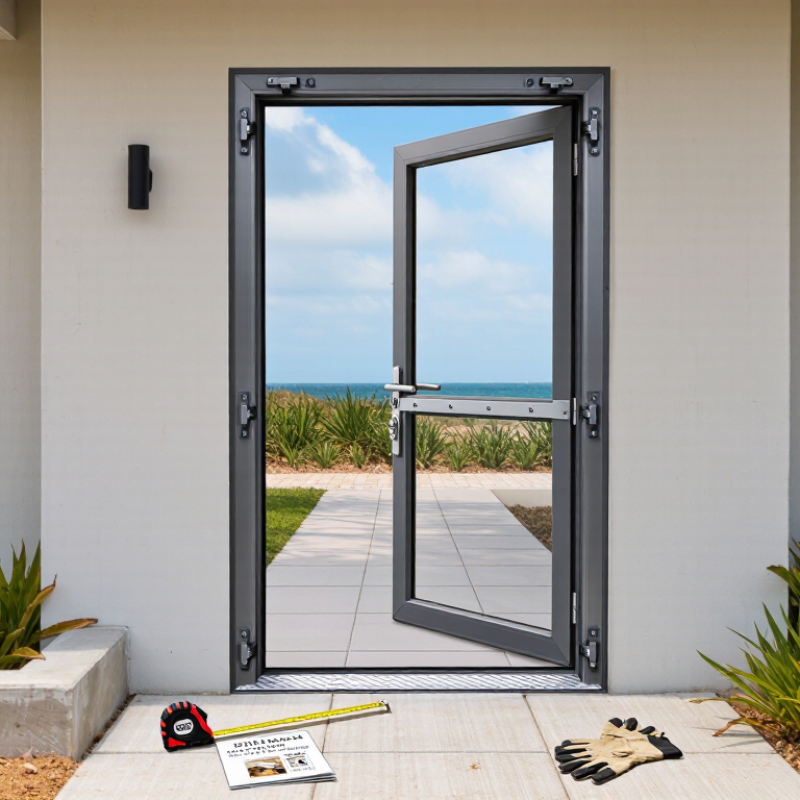
Measure the existing frame, door width, swing direction, and threshold height. Record whether it includes glass, sidelights, or a pet opening; each affects the full assembly. Ask a qualified local building professional which wind-pressure and impact requirements apply to your address. These requirements can vary by exposure and jurisdiction. A tested door can still fail if its frame, anchors, or surrounding wall are unsuitable. Small details matter.

Consider how the door will be used during everyday weather, too.

A high threshold may help limit water entry, but it can create a trip hazard. Check the product’s test documentation and installation instructions, not just a sales description. I would not assume that a door labeled “hurricane” fits every home. The right choice depends on your opening, local risks, and the structure that holds it in place.

Check Local Building Codes and Hurricane-Door Ratings

How to Choose Hurricane Doors in 2026?

Check Local Building Codes and Hurricane-Door Ratings

Before comparing door styles, ask your local building department which code edition and windborne-debris requirements apply to your address. Requirements can change from one neighborhood to the next. A door approved for one opening may not qualify elsewhere. Check the required design pressure, listed in pounds per square foot, and confirm whether the tested assembly includes the frame, anchors, hardware, and glass. Do not rely on “impact-rated” alone.

Look for evaluation documents showing tests under ASTM E1886 and E1996, or the protocols required by your jurisdiction. In Florida, approvals may also reference TAS 201, 202, and 203. Match the listed size and configuration to your actual opening. A sidelight, threshold, or different latch can affect the approved assembly. Confirm that anchor type and spacing follow the installation instructions. Tiny details matter. Check locally.

FEMA’s 2020 Building Codes Save study estimated that modern building codes avoid about $1.6 billion in U.S. disaster losses each year. That figure supports careful code checks, not a claim about any particular door. Ask the building official to verify the approval before purchasing, and request the test documentation rather than relying only on a sales sheet. Ratings can be easy to misread. A high pressure rating alone does not tell the whole story; site exposure and correct installation also affect performance.

Compare Door Materials, Designs, and Protection Features

How to Choose Hurricane Doors in 2026?

Hurricane-door choices involve more than the door slab. Steel can offer a rigid, secure feel, while fiberglass resists moisture and needs less upkeep. Aluminum is lightweight, but coastal salt can damage finishes that lack suitable corrosion protection. NOAA’s 2024 Atlantic Hurricane Season Summary recorded 18 named storms, including 11 hurricanes and five major hurricanes. That exposure makes tested protection worth checking, not guessing.

Compare complete assemblies: door, frame, hinges, locks, glazing, and installation details. ASTM E1886 and E1996 describe testing for impact from windborne debris and repeated pressure changes. Look for test documentation covering the exact configuration, including any glass panels. Laminated glass can help hold fragments together, but it does not replace a tested assembly. A heavy door alone proves little. One detail is easy to miss: the frame’s anchoring must suit the wall and local wind pressure.

Tips: Check the tested size and hardware, not just the product description. Ask for the test report and confirm the required design pressure with a qualified local professional. If the paperwork is unclear, pause before ordering.

How to Choose Hurricane Doors in 2026: Impact-Test Energy Benchmarks

Hurricane-door protection depends on the tested and approved door assembly—not just the door material. These example ASTM E1996 impactors illustrate why both large- and small-missile protection matter. Check local code requirements and the product’s approval for your site; test requirements can vary by jurisdiction and protocol.

Impact energy is calculated from the example projectile mass and speed (½ × mass × speed²). Sources: ASTM E1996 and ASTM E1886.

Evaluate Installation Methods and Contractor Qualifications

When choosing hurricane doors in 2026, compare installation methods as carefully as impact ratings. NOAA recorded 18 named storms, 11 hurricanes, and five major hurricanes in the 2024 Atlantic season. That exposure makes a door’s connection to the wall more than a finishing detail. A retrofit may preserve existing trim, but only if the frame and surrounding structure are sound. Full-frame replacement exposes the opening and can reveal rot, cracked masonry, or missing anchors. Small gaps matter. FEMA’s Coastal Construction Manual, FEMA P-55, describes opening protection and connections as parts of a building’s wind-resistance system; a tested door cannot compensate for weak anchorage.

Ask contractors to inspect the substrate, specify fastener type and spacing, and explain how the installation matches the door’s tested configuration. Request the product approval documents, design-pressure rating, permit plan, proof of insurance, and relevant license before work begins. Confirm who will inspect the job and whether the crew follows the manufacturer’s installation instructions. Sealant helps manage water, but it is not a substitute for structural fastening. A neat bead can look reassuring. It proves little by itself. I’d also ask for photos of concealed anchors before the trim goes back; this is easy to overlook, even when the paperwork looks complete.

Balance Cost, Warranty Coverage, and Long-Term Maintenance

Choosing hurricane doors in 2026 means comparing more than the price on the quote. Ask for documented impact and pressure ratings that match your opening and local building requirements. A lower bid can become expensive if it excludes reinforced framing, hardware, removal, or installation. Get each item listed in writing. Check warranty terms closely: labor, glass, finishes, and hardware may have different coverage periods. That distinction matters when salt air dulls a handle or a seal loosens.

Tips: Photograph the door and hardware after installation. Keep dated inspection notes, and rinse away salt and grit regularly. After a storm, check seals and locks for visible damage; do not force a sticking lock.

Warranty exclusions can be easy to miss. Ask whether coverage changes when maintenance is delayed, and who pays for diagnosis or removal. For upkeep, plan to rinse frames, check seals, and test locks gently. Follow the installer’s care instructions; abrasive cleaners may damage coatings. A long warranty is not proof of low maintenance. It is only one part of the decision. Balance the purchase price against likely service visits, replacement parts, and the time you can realistically spend checking the door.