Who Are the China Top 10 Intelligent Pole Manufacturers?

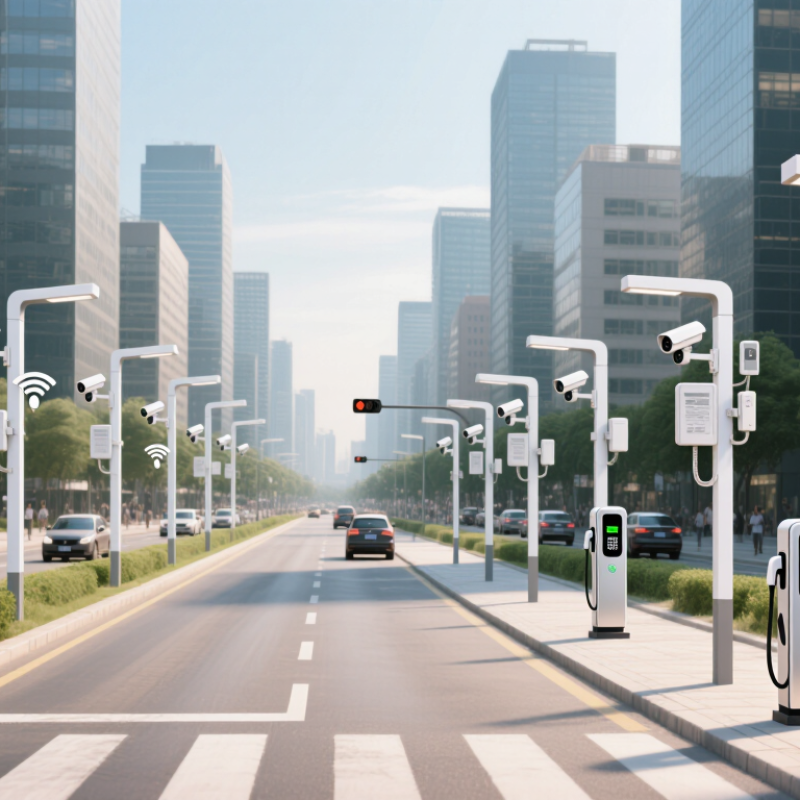
An Intelligent Pole is more than a streetlight with extra equipment. It may combine LED lighting, cameras, environmental sensors, public Wi-Fi, emergency call buttons, and electric-vehicle charging. On a busy road, that can mean one pole monitoring air quality while lighting a pedestrian crossing and carrying a small communications unit. The details matter. A long feature list does not prove that a system works reliably outdoors.

Urban technology researcher and MIT professor Carlo Ratti has said, “The Internet of Things is not about things, it’s about people.” That idea is useful here. A well-designed pole should serve residents and city operators, not just display impressive hardware. This guide examines ten manufacturers through practical criteria: product range, integration capabilities, deployment experience, documentation, and support. It also considers whether companies explain maintenance needs, compatibility, and operating costs clearly. Buyers should verify claims against project records and technical specifications. Names and rankings alone are not enough.

There are trade-offs. More equipment can increase installation complexity, and connected components may age at different rates. A pole that looks neat in a showroom may be harder to service beside a wet, traffic-heavy road. Small point. This comparison is a starting point, not a substitute for site-specific engineering or independent verification. Some public information may be incomplete, and that deserves attention. The manufacturers below are therefore assessed on available evidence, with practical limitations kept in view.
Who Are the China Top 10 Intelligent Pole Manufacturers?

What Defines an Intelligent Pole: Lighting, 5G, Sensors, and Edge Control

An intelligent pole is more than a streetlight with extra hardware. It combines efficient lighting, communications, sensors, and local control on one street-side structure. The International Energy Agency estimates that lighting uses about 15% of global electricity. The U.S. Department of Energy reports that LED street-lighting upgrades can cut energy use by 50% or more, depending on the existing system. That makes lighting a practical starting point, not the whole definition.

A typical setup may pair a dimmable LED luminaire with a 5G radio, air-quality or traffic sensors, and an edge controller. The controller can process readings locally and adjust brightness when a road is quiet or a pedestrian approaches. This can reduce unnecessary lighting and limit reliance on a distant server for every response. But integration is not automatic: radio heat, power limits, sensor placement, and maintenance access all matter. A pole can look advanced and still deliver poor data.

Tips: Check power capacity, radio coverage, and sensor sightlines before installation. Test dimming at street level, not only in a dashboard. Small gaps matter. Dust, glare, and blocked sensors can quietly weaken performance.

MIIT: 4.25 Million 5G Base Stations and 1.01 Billion Users in 2024

MIIT reported 4.25 million 5G base stations and 1.01 billion 5G users in 2024. That scale is changing how cities plan connected infrastructure. Intelligent poles can combine lighting, communications equipment, cameras, environmental sensors, and emergency call functions on one street-level structure. But equipment counts alone do not show how reliably those services work. Coverage, maintenance access, power use, and data security also matter.

Tips: When comparing intelligent pole manufacturers, ask for tested load limits, weather resistance, and clear maintenance procedures. Check whether equipment can be upgraded without replacing the whole pole. Small details count. A neat installation is not enough if technicians cannot reach a faulty sensor safely.

For public agencies, the 2024 figures signal a large potential network, not a guarantee of equal service in every district. Dense commercial streets may support more devices, while older roads can face space and power constraints. Manufacturers should explain how their designs handle these differences, including heat, rain, vibration, and long-term spare-part availability. A weakness worth admitting: technology plans can look complete on paper, yet local conditions often reveal gaps only after installation. Pilot projects and independent performance checks can help expose those gaps before wider deployment.

China’s 5G Infrastructure and User Growth (2020–2024)

Annual 5G base stations and 5G mobile phone users, shown in millions.

By the end of 2024, China had approximately 4.25 million 5G base stations and 1.01 billion 5G mobile phone users. Historical figures are rounded. Source: China’s Ministry of Industry and Information Technology (MIIT).

How to Assess Manufacturers: Integration, Standards, Projects, and Lifecycle Cost

Choosing among China’s top intelligent pole manufacturers requires more than comparing feature lists. MarketsandMarkets’ Smart Poles Market report projected global growth from US$8.8 billion in 2023 to US$20.2 billion by 2028. That forecast signals demand, not supplier quality. Check whether lighting, cameras, sensors, communications, and power controls work together through documented interfaces. Ask for integration diagrams and test records, not just a polished demonstration. A real test.

Standards and field evidence matter. Review relevant IEC or ISO conformity documents, local project specifications, environmental ratings, and cybersecurity procedures. Request references for installations in comparable climates, plus commissioning results and maintenance logs. Ask how faults are diagnosed when a sensor, radio, or power module fails. Small details count: access-panel clearance, cable labeling, corrosion protection, and replacement time. Ask for evidence.

Compare lifecycle cost over a stated service period, including installation, electricity, network fees, software support, inspections, repairs, and component replacement. Require assumptions in writing; low purchase prices can conceal recurring costs. Check warranty exclusions and whether spare parts remain available. One caution: project references may show successful delivery, but not long-term reliability. Seek operating data across several years, then verify it with the project owner.

Who Are China’s Top 10 Intelligent Pole Manufacturers? Company Profiles

Company profiles of China’s intelligent pole manufacturers are most useful when they explain capabilities, not just product names. A credible profile should cover design experience, production capacity, quality checks, and project support. Look for details such as pole height options, steel treatment, access doors, cable routing, and mounting points for cameras or sensors. These features affect installation and maintenance. Small details matter.

Manufacturers in this sector may focus on different strengths. Some integrate lighting, monitoring equipment, and communications hardware; others concentrate on structural fabrication or customized project delivery. Check whether a company provides drawings, material specifications, test records, and clear warranty terms. Ask how it handles installation guidance and replacement parts. A profile should distinguish verified information from sales language. Rankings can be useful, but they may reflect different criteria and change over time. A polished profile can still leave gaps, especially when project references or testing methods are unclear. Compare suppliers against the same requirements, then confirm important claims directly before making a shortlist.

Who Are the China Top 10 Intelligent Pole Manufacturers? - Who Are China’s Top 10 Intelligent Pole Manufacturers? Company Profiles

An evidence-based checklist of ten capabilities for comparing intelligent-pole manufacturers. It is not a ranked list of companies; no company names or company-specific claims are included.

No. Capability area What to assess Relevant reference or factual context
1 Pole structure and materials Check structural calculations, material traceability, wind-load assumptions, access panels, and provision for mounting equipment. GB/T 700-2006 specifies grades and technical requirements for carbon structural steel.
2 Corrosion protection Review coating process, coating-thickness inspection, surface preparation, and repair procedures after fabrication. GB/T 13912-2020 covers hot-dip galvanized coatings on fabricated iron and steel articles.
3 Road lighting Assess luminaire compatibility, lighting-control options, maintenance access, and project-specific lighting calculations. CJJ 45-2015 is China’s standard for urban road lighting design.
4 Ingress protection Request test reports for the complete enclosure and installed configuration, not just individual components. IEC 60529 classifies degrees of protection provided by enclosures using the IP code.
5 Impact resistance Confirm the impact-protection rating required for cabinets and other exposed equipment, and check the associated test documentation. IEC 62262 defines the IK code for classifying enclosure protection against external mechanical impacts.
6 Video surveillance integration Check camera mounting, network and power provisions, time synchronization, and compatibility with the project’s video platform. GB/T 28181-2022 specifies technical requirements for networking, transmission, exchange, and control in public-security video surveillance systems.
7 Communications and connectivity Review the supported wired or wireless backhaul, network security arrangements, equipment interfaces, and coverage requirements for each deployment. Connectivity choices depend on the application and site; confirm performance and interoperability through project-specific tests.
8 Sensors and environmental monitoring Check sensor types, calibration records, data interfaces, installation locations, and arrangements for maintaining measurement quality. Sensor selection and measurement performance should be specified for the intended application rather than assumed from the pole design alone.
9 Power distribution and electrical safety Assess load calculations, circuit protection, grounding and bonding, cable segregation, and safe isolation for maintenance. Electrical design and installation requirements must be checked against the applicable codes and conditions of the project.
10 Platform, maintenance, and lifecycle support Evaluate device management, alarm handling, software updates, spare-parts availability, maintenance access, and exportable operational data. These are procurement and operational criteria; verify them through documented specifications, demonstrations, and acceptance testing.

How the Top 10 Compare: Verified Deployments, Compatibility, and Service Coverage

Who Are the China Top 10 Intelligent Pole Manufacturers?

Comparing China’s top ten intelligent pole manufacturers takes more than reviewing product photos or feature lists. Look for named deployment locations, installation dates, and operating references that can be checked independently. A pole working on a real street faces rain, dust, heat, and maintenance delays. Those conditions reveal more than a polished demonstration. Still, public case studies can leave gaps; not every project report explains long-term performance.

Compatibility deserves close attention. Confirm that the pole supports the required cameras, sensors, lighting controls, and communication equipment. Ask for interface specifications and test records, not just verbal assurances. Service coverage matters too. Check where technicians are based, which spare parts are stocked, and how quickly faults are handled. Details can vary by region. That is easy to overlook.

Tips: Request a deployment reference and a compatibility list. Ask who provides on-site support, and have responsibilities written into the service plan. Compare answers across all ten suppliers using the same checklist. Some information may remain unavailable; note the uncertainty rather than treating a sales claim as verified evidence.